


- Anatomy
- Conditions
- Procedures
Ankle Arthropathy
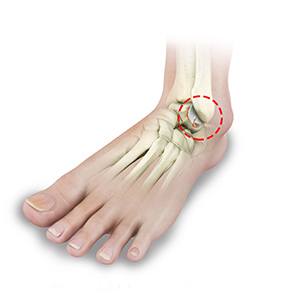
Ankle arthropathy refers to disease or degeneration of the ankle joint, leading to pain, stiffness, swelling, and reduced mobility. It is a broad term that encompasses various joint pathologies affecting the ankle, including osteoarthritis, rheumatoid arthritis, post-traumatic arthritis, and other inflammatory or degenerative conditions.
Foot Fracture
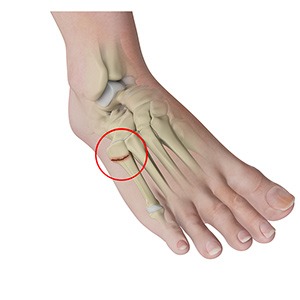
Trauma and repeated stress can cause fractures in the foot. Extreme force is required to fracture the bones in the hindfoot. The most common type of foot fracture is a stress fracture that occurs when repeated activities produce small cracks in the bones.
Ankle Fractures
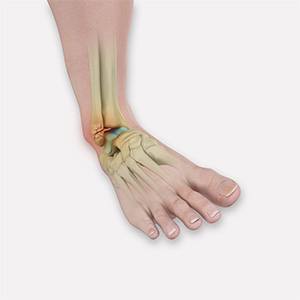
Ankle injuries are very common in athletes and individuals performing physical work; often resulting in severe pain and impaired mobility. Pain after ankle injuries can either be from a torn ligament (ankle sprain) or broken bone (ankle fracture). An ankle fracture is a painful condition where there is a break in one or more bones forming the ankle joint.
Foot and Ankle Arthritis
Arthritis is the inflammation of joints as a result of degeneration of the smooth cartilage that lines the ends of bones in a joint. This degeneration of the cartilages leads to painful rubbing of the bones, swelling, and stiffness in the joints, resulting in restricted movements.
Foot and Ankle Trauma

Foot and ankle trauma refers to injuries that affect the bones, joints, ligaments, tendons, or soft tissues of the foot and ankle. These injuries can result from accidents, falls, sports activities, poor training practices, high-energy trauma, such as motor vehicle accidents, or from the use of improper gear.
Achilles Tendon Rupture
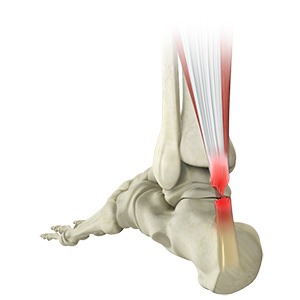
The Achilles tendon is a strong fibrous cord present behind the ankle that connects the calf muscles to the heel bone. It is used when you walk, run and jump. The Achilles tendon ruptures most often in athletes participating in sports that involve running, pivoting and jumping.
Talus Fractures
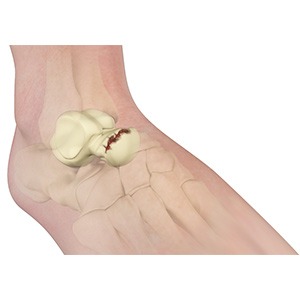
The talus is a small bone at the ankle joint that connects the heel bone and the shinbones, enabling up and down movement of the foot. Fractures in the talus bone may occur due to a fall from a great height, motor vehicle accident or sports injury. When you present to the clinic with these symptoms, your doctor will perform a thorough physical examination and order an X-ray or CT scan to determine the location and severity of the fracture.
Achilles Tendonitis
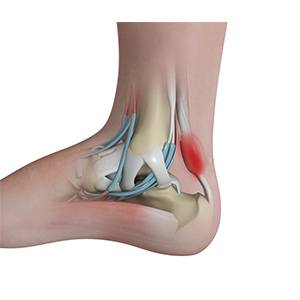
The Achilles tendon is a tough band of fibrous tissue that runs down the back of your lower leg and connects your calf muscle to your heel bone. The tendon is used when you walk, climb, jump, run and stand on your tip toes. Inflammation of the Achilles tendon is known as Achilles tendonitis or tendinitis.
Heel Fractures
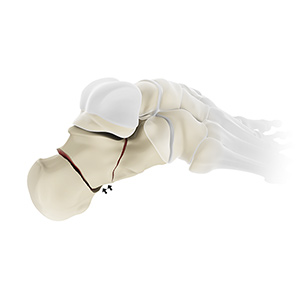
The calcaneus or heel bone is a large bone found at the rear of the foot. A heel fracture is a break in the heel bone due to trauma or various disease conditions. A fracture of the heel bone occurs most commonly due to a traumatic event such as falling from a height, twisting injuries, motor vehicle accidents and ankle sprains.
Bunion
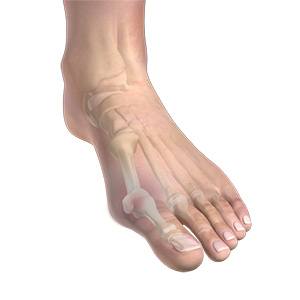
A bunion, also known as hallux valgus, is a bony protuberance that appears on the outer surface of the big toe when it angles toward the adjacent toe. It is an extra bone and a fluid-filled sac that grows at the base of the big toe. Bunions are common in women and tend to run in families (heredity).
Flatfoot
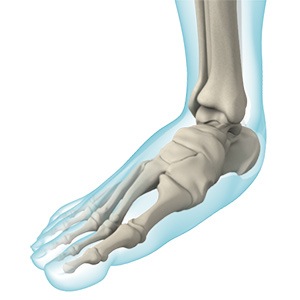
Flatfoot, also known as “fallen arches” or Pes planus, is a deformity in children’s feet where the arch that runs along the sole of the foot collapses to the ground or is not formed at all. Flatfoot is normal in the first few years of life as the arch of the foot usually develops between the age of 3 and 5 years.
Hammertoe
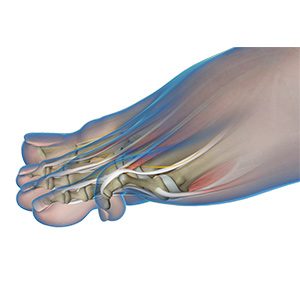
A hammertoe is a deformity of a lesser toe (second through fifth toes), where the toe is bent upward at the toe’s middle joint, resembling a hammer. The bent portion may rub against the shoe causing pain, irritation and develop corns. A hammertoe in the early stages is flexible and may be treated by conservative measures such as strapping, padding and wearing appropriate footwear.
Ankle Dislocation
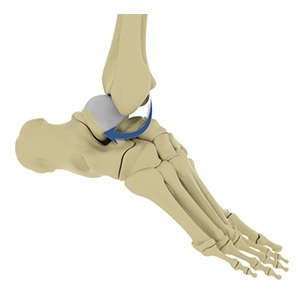
Ankle dislocation is a condition that occurs when the bones of the lower leg called the fibula and tibia get separated from the talus or ankle bone. This can cause serious damage to the nerves and ligaments surrounding the ankle, leading to a decline in strength and overall health of the leg.
Ankle Ligament Injury
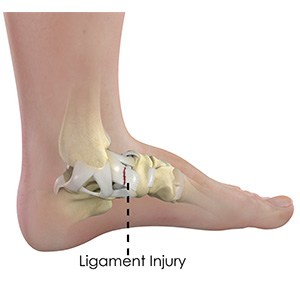
Ligaments are made up of elastic tissues that interconnect bones to one another. They bind the joint together, providing stability and support to the joint. The ligaments protect the ankle joint from abnormal rotation and stabilize the joint during movement.
Ankle Impingement
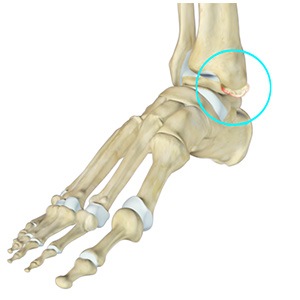
The ankle is made up of many bones, muscles, and ligaments that aid in the smooth movement of the foot. Ankle impingement is the painful limitation of movement of the ankle due to an abnormality in the soft tissue or bone. Impingement can occur in the ankle's front (anterior ankle impingement) or back (posterior ankle impingement).
Ankle Sprain
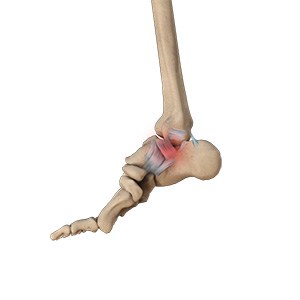
A sprain is the stretching or tearing of ligaments. Ligaments connect adjacent bones and provide stability to a joint. An ankle sprain is a common injury that occurs when you suddenly fall or twist the ankle joint, or when you land your foot in an awkward position after a jump.
Ankle Instability
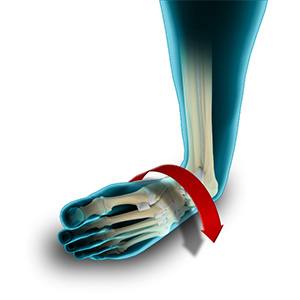
The joints of the ankle are held in place and stabilized by strong bands of tissue called ligaments. Ankle instability is a chronic condition characterized by a recurrent slipping of the outer side of the ankle. It usually results from repeated ankle sprains, which are injuries to the ligaments.
Ankle Pain
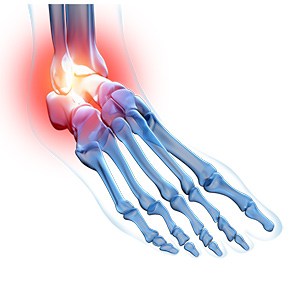
Ankle pain refers to any form of pain or discomfort affecting the ankle joint. Your ankles are more prone to injury and pain since they bear the weight of your entire body. The ankle joint is composed of three bones: the tibia, fibula, and talus. It connects the leg to the foot. The tibia or shinbone, and fibula or calf bone,
Foot Pain

Foot pain occurs from distress induced by certain factors on the foot. It is a common problem experienced by young athletes involved in various activities such as running and jumping. Normally, foot pain can be treated with home treatments and may take time to heal. However, in cases of severe injury, adequate evaluation and treatment are required.
Heel Pain
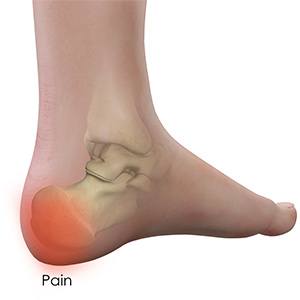
The heel is made up of the calcaneus bone and supported by a network of muscles, tendons, ligaments and soft tissues, which together support the weight of the body and stress during movement. Heel pain is a common symptom of excessive strain placed on the structures that form the heel.
Foot Lesions

A foot lesion is an abnormal change in an area of skin on the foot. It may be caused by infection, injury or abnormal growth of tissue. Foot lesions are commonly seen in diabetic patients due to nerve damage and poor circulation. There are different types of foot lesions and they can be broadly classified as benign (non-cancerous) or malignant (cancerous).
Foot Inflammation
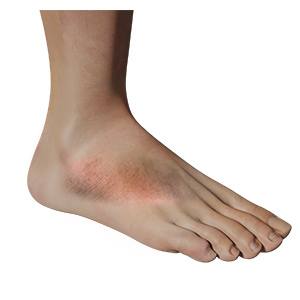
Foot inflammation is the result of a person’s immune response towards various irritants or injuries to the foot. Based on the type of response, the inflammation can be classified as acute when it occurs suddenly, or chronic, occurring gradually as a result of a long-term disorder.
Toe Fractures

A fracture is defined as a break in the continuity of the bone when a force against your body is too strong for the bone to bear. A toe fracture is when one or more of the toe bones of the foot are broken after severe trauma to the toes or foot. Toe fractures are commonly divided into 2 types namely, traumatic fracture and stress fracture.
Foot and Ankle Sports Injuries

Foot and ankle sports injuries are damage sustained to the foot and ankle during sports and exercises. Foot and ankle sports injuries may be either acute (sprains, fractures, tears) or chronic (tendonitis, overuse injury) injuries. Foot and ankle sports injuries typically occur when the foot or lower leg twists unexpectedly while playing sports such as football, basketball, hockey, skating, tennis, and athletic activities.
Stress Fractures of Foot and Ankle
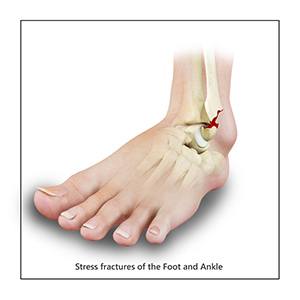
A stress fracture is described as a small crack in the bone which occurs from an overuse injury of a bone. It commonly develops in the weight-bearing bones of the lower leg and foot. When the muscles of the foot are overworked or stressed, they are unable to absorb the stress and when this happens the muscles transfer the stress to the bone which results in stress fracture.
Lesser Toe Deformities

Lesser toe deformity is an abnormality in the anatomy of your toe that occurs as a result of imbalance between the intrinsic and extrinsic muscles. Lesser toes in your foot are those other than the big toes and together stabilize your foot while standing and help in balancing the body.
Tarsal Tunnel Syndrome
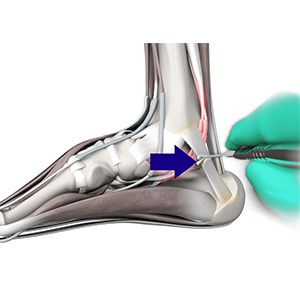
The tarsal tunnel is a narrow passageway that lies on the inside of your ankle and runs into the foot. It encloses arteries, veins, tendons and nerves that supply the foot. The tunnel holds very limited space as it is formed between bones and overlying fibrous tissues. Within the tarsal tunnel lies and runs a nerve called ‘posterior tibial nerve’.
Ankle Tendonitis
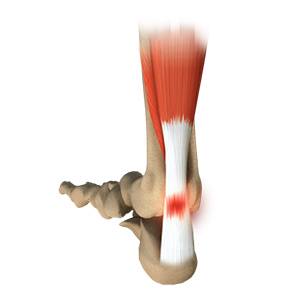
Ankle tendonitis is an inflammation of a tendon located in your ankle. Tendonitis can usually happen due to overuse of your ankle with repetitive movements or stretching. The ankle is one of the most common areas to develop tendonitis over other parts of the body. It is also sometimes referred to as ankle tendinitis.